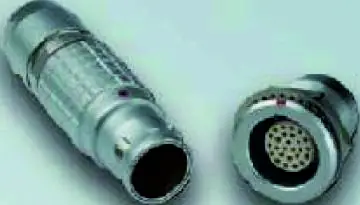
product catalog reference
Mating-pair reference for evaluation
A visual input for the cross-reference evaluation process.
Connector project selection
Submit an existing connector part number, controlled drawing or mating reference for a structured replacement and cross-reference review.
Product portfolio
Use the visual references to identify the series or configuration you want us to review.
A visual input for the cross-reference evaluation process.
Selection priorities
Name shown on the controlled source document
Full suffixes, keys, contact and accessory codes
Controlled source drawing, specification and revision
Complete mating part number and orientation
Panel thickness, cutout, hardware and installation drawing
Critical dimensions and tolerance stack
Keys, keyways, polarizing positions and orientation
Insert number, contact count, size, type and circuit allocation
Project fit
Start with the connector already in use: its original maker, complete part number, controlled drawing, mating counterpart, installation details and required performance.
A review may identify a candidate for evaluation, a dimensional comparison still in progress, an electrical or environmental gap, a mating verification need, or a validation requirement. No candidate is described as interchangeable before those checks are closed in writing.
Provide the original maker, complete part number, controlled drawing or specification revision, mating half, panel and mounting details, electrical and environmental duty, required qualification, validation plan, destination and final use.
Engineering conversation
1. Identity and document completeness — confirm the original manufacturer, complete part number and applicable document revision.
2. Mechanical interface — compare envelope, mounting, panel cutout, shell dimensions and installation constraints.
3. Mating, keying and polarization — verify the exact mating pair, coupling, keys and orientation.
Discuss engineering inputsInquiry checklist
Frequently asked questions
No. It identifies a candidate for evaluation. Mechanical, mating, electrical, environmental, qualification and validation requirements must be closed before any written conclusion.
Provide the original manufacturer, complete part number, controlled drawing or specification revision, mating part, installation data and all applicable performance, qualification and end-use requirements.
No.
Physical validation is required whenever the agreed risk and application require inspection, mating, functional or environmental confirmation. The plan and acceptance authority must be defined before testing.
They require Compliance Review.
Ready to continue?
Our team will organize the engineering, documentation and commercial follow-up for your request.